11-12 December 2025, Nairobi, Kenya. Residential workshop Transformative Teaching of Neglected and Underutilized Species (NUS) - Linking Education, Innovation, and Enterprise Development
Organised with funding from the International Foundation for Science (IFS, Sweden) for the workshop operational costs and the European Commission who supports GFAiR and the Collective Action on Higher Education for Forgotten Foods.
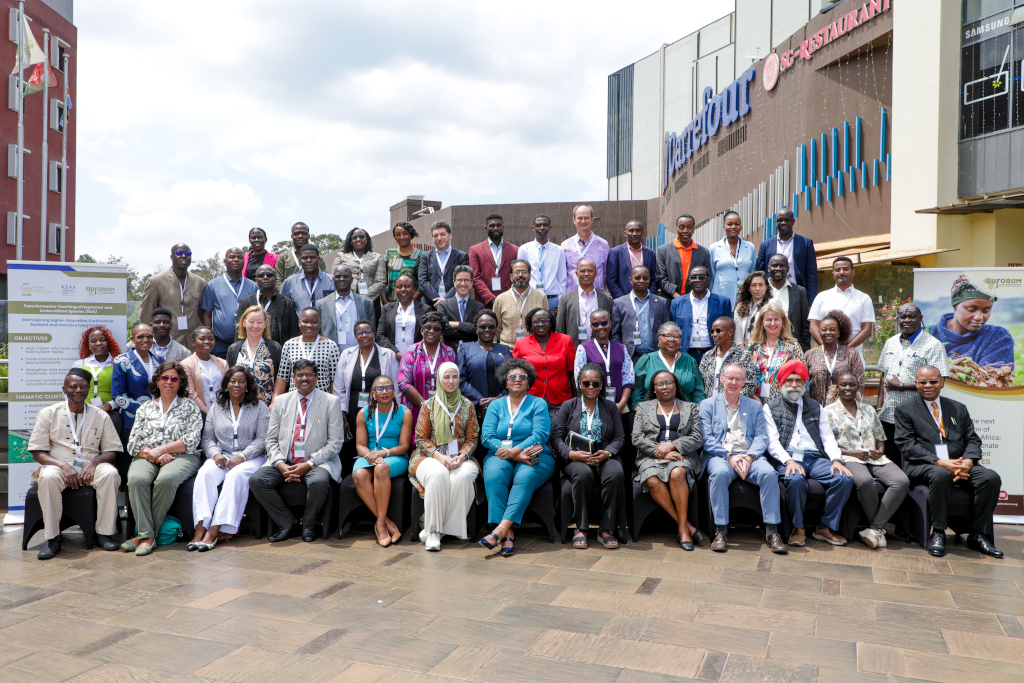
- See the pictures
- See the NUS Workshop Compendium

The Transformative Teaching of Neglected and Underutilized Species workshop convened more than 50 participants including university lecturers, curriculum developers, researchers, representatives of research institutions, civil society, incubators, accelerators, MSMEs and innovation partners working in agriculture, nutrition, biodiversity, and enterprise development. Participants came from Africa, India, Latin America, and the Caribbean, creating a genuinely cross-regional learning space.
The workshop marked the formal launch of the Network for NUS Education and Curriculum Development which aims to strengthen university teaching and learning on neglected and underutilized species through a systems-based approach that links nutrition, health, climate resilience, innovation, and enterprise development. Over the two days, participants worked in crop-based clusters and cross-cutting working groups to co-design curriculum frameworks, identify priority teaching modules for piloting in 2026, and agree on a shared twelve-month action plan. The workshop resulted in clear commitments from participating institutions to collaborate on curriculum innovation, applied learning, and open knowledge sharing.

“The food that is shared tastes better.”
“One hand cannot cook a meal alone.”
“Wisdom is like a baobab tree; no one individual can embrace it.”
The workshop aimed to co-create a shared vision and framework for integrating NUS into higher education curriculum and to strengthen multi-stakeholder collaboration for research, teaching, and enterprise development. It was designed as a highly participatory forum with three core objectives. First, to develop a shared vision and initial framework for systems-based teaching on NUS across regions and disciplines. Second, to identify prototype curriculum modules and applied learning approaches that universities can adapt and pilot. Third, to build a committed community of educators and partners ready to collaborate over the next twelve months.
The programme combined keynote perspectives, facilitated peer learning, crop cluster group work, and co-design laboratories. This structure ensured that discussions moved beyond concept development toward practical and time-bound actions.
Outcomes
- Strengthened collaboration among universities, CGIAR centers, research networks, and civil
society partners to advance NUS innovation and education.

- Enhanced alignment between academia, incubators, accelerators, and enterprise partners to promote NUS-based entrepreneurship and innovation among students.
- A committed core group of educators, researchers, and innovation partners equipped to co-develop and pilot NUS-related teaching modules in their institutions.

- Formation of a 12-month community of practice bringing together universities, CGIAR centers, and implementation partners to exchange lessons, track pilots, and refine teaching models for NUS integration.
Keynotes
- Carlo Rega, Coordinator, Knowledge Centre for Global Food and Nutrition Security, European Commission Joint Research Centre (JRC) Ispra, Italy -
Global Institutional and Policy Perspective
Carlo Rega opened the keynote session by sharing how the European Commission’s Knowledge Centre for Global Food and Nutrition Security supports decision-making through structured evidence. He presented findings from a knowledge review prepared for EU directorates, highlighting the role of NUS in food security, nutrition, biodiversity, and resilience, and their untapped potential in therapeutic food systems. He outlined policy actions such as investment in seed conservation, NUS-based value chains, and capacity building—offering a direct link between policy instruments and curriculum content. His address provided a strong framework for aligning teaching modules with global policy momentum and donor priorities

- Prof. Agnes W. Mwang’ombe, Professor of Plant Pathology, Department of Plant Science and Crop Protection and Coordinator, Seed Enterprise Management Institute (SEMIs), University of Nairobi, Kenya
Prof. Mwang’ombe emphasised the urgency of reducing post-harvest losses of NUS (estimated at 30-40%) through better handling, infrastructure, and training. She advocated for universities to integrate practical modules that teach solar drying, fermentation, composite flours, and product packaging, preparing students for real-world processing and agribusiness roles. Using student-led innovations at the University of Nairobi, she illustrated how graduate research can result in market-ready products and by-product innovations. Her talk reinforced the importance of equipping students with skills in food safety, shelf-life extension, and value chain development.
- Prof. Pravat Kumar Roul, Vice Chancellor, Odisha University of Agriculture and Technology (OUAT), Bhubaneswar, India - Higher Education and Agrifood Transformation in Asia
Prof. Roul offered a systems lens on how NUS can address persistent hunger and undernutrition despite national food self-sufficiency. He demonstrated how agricultural curricula in India allow significant flexibility for localised, NUS-focused course content. His proposed strategy-combining conservation, research, commercialisation, and consumer education-provided a model for aligning NUS integration with national priorities. His emphasis on pseudocereals, legumes, and indigenous vegetables, backed by nutritional data, offered useful templates for curriculum design and regional case study development.
- Dr. Sonia Peter, Founder and Executive Director, Biocultural Education and Research Programme (BERP), Barbados
Dr. Peter shared how NUS education can be enriched by culture, history, and creative tools such as art and storytelling. Her examples from the Caribbean, including medicinal plant gardens, student documentaries, and branded heritage teas, demonstrated how NUS can serve as entry points for citizen science, school learning, and community entrepreneurship. She made a strong case for embedding local biodiversity knowledge in university curricula and for teaching models that combine science with storytelling, policy, and public engagement.
- Prof. Christopher Chiedozie Eze, University of Agriculture and Environmental Sciences, Umuagwo, Nigeria
Agribusiness education, NUS-focused curriculum reform, and youth enterprise development in Africa
Prof. Eze urged a fundamental shift in how African universities teach agribusiness. He proposed embedding NUS into practical, market-driven education that links research to product design, incubation, and entrepreneurship. His examples included solar drying technologies, postgraduate courses on endangered species, and youth innovation programmes, all designed to transform teaching into enterprise support. He challenged institutions to reposition graduates as NUS ambassadors, equipped with the tools to innovate, influence policy, and scale sustainable food systems


- Prof. Reinhold Muschler, CATIE - Regional Thought Leadership and Agroecological Education in Latin America and the Caribbean

- Dr Yosef Gebrehawaryat Kidane, Senior Scientist, Alliance of Bioversity International and CIAT, Nairobi
Powerpoint presentations
Carlo Rega, Coordinator, Knowledge Centre for Global Food and Nutrition Security, European Commission Joint Research Centre (JRC) Ispra, Italy - Leveraging Evidence and Policy to Advance NUS Integration in Food Systems - Insights from the European Commission Knowledge Centre for Global Food and Nutrition Security
Prof. Agnes W. Mwang’ombe, Professor of Plant Pathology, Department of Plant Science and Crop Protection and Coordinator, Seed Enterprise Management Institute (SEMIs), University of Nairobi, Kenya - Reducing post-harvest losses of Neglected and Underutilized Species (NUS)
Prof. Pravat Kumar Roul, Vice Chancellor, Odisha University of Agriculture and Technology (OUAT), Bhubaneswar, India - NUS in agriculture curriculum towards food and nutritional security
Dr Sonia Peter Founder and Executive Director, Biocultural Education and Research Programme (BERP), Barbados - Reclaiming Biocultural Knowledge through Education and Citizen Engagement for NUS Conservation
Prof. Christopher Chiedozie Eze, University of Agriculture and Environmental Sciences, Umuagwo, Nigeria - Reimagining agribusiness education : leveraging neglected and underutilized species for innovation and entrepreneurship development in Africa
Prof. Reinhold Muschler, CATIE - Regional Thought Leadership and Agroecological Education in Latin America and the Caribbean - CATIE: a regional platform for inclusive green development
Dr Yosef Gebrehawaryat Kidane, Senior Scientist, Alliance of Bioversity International and CIAT, Nairobi - Bridging the gap: how genomic insights reveal farmer preferred traits missing in conventional breeding and performance of NUS
Discussion Highlights

Participants reflected on the keynotes with emphasis on:
- The need to integrate NUS into formal curricula across disciplines.
- Inclusion of environmental and health perspectives in curriculum design.
- Recognition of cultural and consumer behaviour dimensions of neglected crops.
- Bridging skills gaps between academic training and enterprise needs.
- Inclusive innovation that engages youth, communities, and the private sector.
These discussions emphasized the relevance of the workshop in shaping education that supports local research and innovation in line with IFS goals to strengthen research capacity and applied knowledge in developing countries.
Group Discussions, Action Planning, Workshop Outputs
Participants organised into crop clusters including cereals, legumes, roots and tubers, fruits, and vegetables/medicinal plants to document where NUS currently feature in teaching, identify gaps, and co-design practical curriculum modules. These sessions produced:
- Detailed insights into barriers and opportunities across crop groups.
- Competency frameworks for graduates emphasizing innovation, enterprise, systems thinking, and value chain skills.
- Example module outlines spanning theory and hands‑on learning, practical assessments, value addition, postharvest handling and enterprise development.
In final action planning, two cross-cutting working groups developed a 12‑month action plan with defined activities, expected outputs and timelines to ensure implementation across participating institutions.
Outputs
A Shared Curriculum Framework
Participants reached consensus on a flexible, systems-based curriculum structure that can be adapted across universities and regions. The framework places Neglected and Underutilized Species (NUS) at the center of teaching across agronomy, nutrition, climate resilience, value chains, and enterprise development. It encourages multidisciplinary teaching and promotes integration of NUS in modules on sustainable agriculture, food systems, health, and environmental management.
Prototype Module Concepts for Piloting
Each crop cluster developed draft module outlines, highlighting key competencies, intended learning outcomes, suggested delivery approaches, and assessment methods. These outlines are intended for integration into existing academic programmes, with piloting scheduled for 2026 in selected institutions.
A 12‑Month Work Plan
ITo move from curriculum design to implementation, over 50 participants were reorganised into two cross-cutting working groups that spanned across the original crop clusters. These groups were tasked with developing a practical twelve-month action plan, anchored in realistic timelines, shared milestones, and clear responsibilities.

- Working Group 1: NUS Content and Value Chains focused on strengthening the teaching and practical engagement with NUS value chains. Their scope covered how NUS are conceptualised in teaching and research, their product development potential, post-harvest handling, value addition and processing, market access, sustainability, and research gaps. The group developed a coordinated activity plan that includes needs assessments, product mapping, environmental and IP assessments, and gap analyses, with concrete outputs such as business plans, protocols, and synthesis reports.

- Working Group 2: Enabling Environment and Institutional Change addressed the broader systems required to support curriculum transformation. This included curriculum design processes, pedagogical approaches, quality standards and policy frameworks, ethics in NUS value chains, infrastructure needs, and mechanisms for institutionalising NUS teaching. They also defined actions to enhance engagement with industry, private sector, and youth, including the creation of NUS student clubs, partnerships with incubators, and co-curricular activities. Outputs range from teaching frameworks and advocacy briefs to MOU lists and campus action models.
Community of Practice
The workshop established a functional community of practice composed of educators, researchers, and development actors committed to advancing NUS teaching and innovation. Participants self-identified as focal points to lead and coordinate ongoing efforts. This network will continue to support peer learning, technical collaboration, joint research, and piloting of new curricula across regions.
Next Steps
The Network will implement the 12‑month work plan, including:
- Finalising and piloting curriculum modules in selected universities.
- Facilitating lecturer training and peer learning events.
- Establishing mechanisms for monitoring progress and knowledge sharing.
- Disseminating materials through open educational platforms.
These actions are designed to scale NUS integration in higher education and support applied research and enterprise pathways for students and researchers.
Organizing Partners
.jpg)
RUFORUM (Regional Universities Forum for Capacity Building in Agriculture)
RUFORUM is a pan African consortium of universities that supports postgraduate training, research and innovation in agriculture and related fields. The network promotes regional collaboration among African universities, strengthens graduate training, and links university programmes to farmer needs, agribusiness and policy processes. RUFORUM’s work responds to continental frameworks on agriculture, education and science, and includes competitive grants, regional doctoral programmes, curriculum reform and support for youth and women in agrifood systems.
GFAiR (Global Forum on Agricultural Research and Innovation)

GFAiR, operating under the name Global Forum on Agricultural Research and Innovation (GFAR), is a multi-stakeholder platform that brings together farmer organisations, national agricultural research systems, universities, international research centres, civil society, the private sector and development agencies. The Forum works to make agri food research and innovation systems more effective, responsive and equitable, with a focus on supporting smallholder farmers and achieving sustainable development goals. GFAR facilitates collective action, shared agendas and partnerships that align research and innovation with the needs of farmers, rural communities and food system actors.
IFS (International Foundation for Science)

The International Foundation for Science is an independent non governmental organisation that provides small research grants and tailored capacity strengthening to early career scientists in low and lower middle income countries. IFS supports researchers who work on the sustainable management of biological and water resources, including agriculture, food, biodiversity and environment related topics. The foundation combines individual grants with mentoring, training and networking so that promising scientists develop strong careers, join international research communities and contribute to local and national problem solving.
- The contribution from IFS enabled over 50 educators, researchers, and innovation partners from across Africa, Asia, Latin America, and the Caribbean to convene in Nairobi for two days of focused planning and collaboration.
- This investment came at a pivotal moment, as IFS prepares to conclude operations after five decades of supporting early-career scientists. The Nairobi workshop serves as a lasting testament to the IFS legacy - bringing together new generations of academics and practitioners committed to transforming agricultural education through innovation, interdisciplinarity, and the integration of neglected and underutilized species (NUS).
European Commission (EC) - Joint Research Centre
For this workshop, the European Commission is represented through the Joint Research Centre, theCommission’s internal science and knowledge service. The JRC provides independent scientific evidence and technical support for European Union policies across the whole policy cycle, including areas such as sustainable agriculture, food systems, land use and ecosystem services. Work includes modelling, data analysis, development of indicators and support to policy design and evaluation, carried out in collaboration with partners in Europe and internationally. Through this role, the JRC contributes policy and evidence perspectives that link agrobiodiversity and NUS to wider debates on sustainability, climate action and rural development.

Resources:

Roba Al-Mohusain , Rida Shibli, Rayeh Alghsoon & Tamara Al Qudah (2026) Neglected and underutilized food plants: Prospects in the Near East and North Africa – a review 15 p.
This review on neglected and underutilized food plants (NUSs) in the Near East and North Africa (NENA) region highlights their significant potential to boost food security, climate resilience, and nutrition in arid areas, showcasing drought-tolerant species like Christ's thorn jujube, purslane, rocket, amaranth, and quinoa that thrive in harsh conditions. These nutrient-rich crops offer sustainable alternatives to staples, combat micronutrient deficiencies, support local biodiversity, and empower women, though challenges like low awareness and underdeveloped value chains require research, policy, and community-led development to unlock their full potential for new, inclusive food systems in the region.

A. Adefila, A. Cheikhyoussef, A. Saarto, Joyce Lepetu, K.F. Egbadzor & R. Isomäk Baobab & Marula: new solutions to global warming and Food security 333 p
Baobab (Adansonia digitata) and marula (Sclerocarya spp) can become large trees even in arid conditions where nothing else grows well. Baobab and marula cannot burn in forest fires, and they are extremely resistant to insect pests and plant diseases. Both trees produce large amounts of nutritious and popular food and could be planted sparsely on vast areas of land without changing local land-use patterns.
Tognoli, F.; Borelli, T.; Grazioli, F. (2024) Manuel pratique pour initier les enfants à la connaissance de l’importance des NUS au Burkina Faso. Manuel de l’enseignant. 68 p. Rome (Italy) Association Watinoma et Bioversity International ISBN: 978-92-9255-326-5
Growing the future: A hands-on teacher’s guide to reviving forgotten crops through intergenerational learning
Teacher Manual developed in Burkina Faso, under the Sustlives project – that could easily be adapted in other regions- to promote NUS in schools.
This manual serves as a teacher's guide to help primary school students appreciate Neglected and Underutilized Species (NUS) – food species that are culturally significant and locally adapted, with notable nutritional value. Created within the framework of the EU-funded SUSTLIVES project, this educational resource is the first to establish a methodology for introducing NUS in the classroom to strengthen messaging on the protection of agrobiodiversity. It employs a participatory and inclusive approach, taking into account both gender and age, and offers practical guidance for teachers aiming to engage children and raise their awareness of the importance of NUS. Although originally designed for Burkina Faso and Niger, it can be adapted for use in other regions.
The Network for NUS Education and Curriculum Development


The Network for NUS Education and Curriculum Development links
universities in Africa, India, Latin America, and the Caribbean. The goal is to embed NUS in innovation, trade, and enterprise development through more entrepreneurial and systems-based teaching.
The multi-regional Network for NUS Education and Curriculum Development will link up to ten universities from Africa (RUFORUM members), Latin America, the Caribbean, and India. The network will co-create a system-based open-source curriculum that situates NUS within the broader nutrition and food system-from production to consumer behavior. The approach will move beyond academic boundaries to address real-life applications that connect production, trade, technology, and modern consumption patterns.
The activities will be :
- Shortlist and confirm up to ten RUFORUM member universities and Nominate them to the multi-regional expert group and coordinate their attendance in co-design meetings. Deliverable: membership list and attendance records.
- Coordinate baseline submissions from selected universities on NUS data, teaching, and food composition using the network template. Deliverable: Africa baseline integrated into the global report.
- Consolidate Africa inputs to the system-based curriculum framework across production, environment, and nutrition. Deliverable: compiled Africa contributions.
- Host Africa workshops with universities, CGIAR, and industry to draft modules and prototype materials. Deliverable: workshop reports, draft modules, and prototypes ready for review.
- Support pilot delivery in selected Africa universities, including lecturer training and student feedback capture. Deliverable: pilot implementation report.
- Contribute Africa content to the open-source platform and run a regional launch webinar and outreach to curriculum bodies. Deliverable: published materials and dissemination brief with metrics.
- Broker Africa linkages among universities, CGIAR centers, private sector, and policymakers. Deliverable: partner roster and collaboration letters where applicable.
Related:
China is piloting a major PhD reform in strategic engineering fields (like semiconductors, quantum computing, defense) where students can earn a doctorate by developing a functional product or design, rather than a traditional thesis, focusing on national tech strategy and breaking bottlenecks, a significant shift from Western models emphasizing theoretical papers. This involves direct collaboration with industry and labs, with degrees granted for tangible innovation, exemplified by Harbin Institute of Technology (HIT) where one student recently graduated this way.
Key Aspects of the Reform
- Focus on Practicality: The goal is to solve real-world, critical technical challenges, moving beyond academic papers to tangible solutions.
- Strategic Importance: The program targets areas vital to China's technological self-reliance, aiming to overcome foreign tech blockades.
- Industry-Academia Integration: Students work directly with leading companies and national labs on applied projects.
- "Product-Based" Graduation: A functional product, system, or process can replace the traditional dissertation as the core requirement for a PhD.