
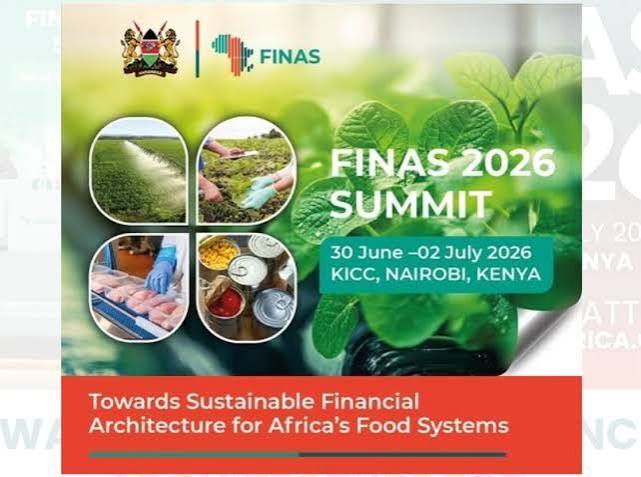
30 June–2 July 2026,Nairobi, Kenya. The Financing Agri-Food Systems Sustainably (FINAS) 2026 Dialogue was held from under the theme "Towards Sustainable Financial Architecture for Africa's Food Systems."
The summit brought together governments, development banks, financial institutions, agribusinesses, farmer organizations, investors, research organizations, and development partners to explore how Africa can mobilize and better align finance for food systems transformation.
Dr. Charity Mutegi, Director: "Agriculture continues to power Africa’s economies, yet financing models
remain stuck in the past. Despite donor funding and countless initiatives, the numbers have not shifted. This question is at the heart of #FINASSummit dialogue. That stagnation tells us one thing: we must do something differently."
By aligning policy, innovating finance models, and forging partnerships, we can unlock inclusive, de‑risked solutions for Africa’s food systems.
Programme
Overall, FINAS 2026 featured more than 50 plenary sessions, side events, deal rooms and masterclasses, with speakers drawn from African governments, the private financial sector, development finance institutions, farmer organizations, international organizations, research institutions and development partners. The programme emphasized practical financing solutions for policy alignment, inclusive finance, climate resilience, agrifood SMEs and investment mobilization across Africa.

The programme was organized around four major thematic pillars.

1. Policy Alignment and Coordination
This track focused on creating coherent financing frameworks that support implementation of the Kampala CAADP Declaration and national agricultural investment plans.

Main sessions included:
- Continental Roundtable: Policy Alignment and Coordination for Financing the Kampala
CAADP Declaration - Using National Agrifood Systems Investment Plans (NASIPs) to mobilize, coordinate and monitor investments
- Launch of the Kenya National Agrifood Systems Investment Plan (NASIP) 2026–2030
Key discussion themes
- Harmonizing national and continental investment strategies
- Public finance reforms
- Improving accountability for agricultural expenditure
- Better coordination among governments, donors and private investors.

2. Innovative and Inclusive Finance Models
One of the largest streams examined how to unlock finance for farmers, cooperatives and agrifood SMEs. Panels and side events covered:
- Making Agricultural Development Funds work
- Public Development Banks and agricultural finance
- Wholesale lending for agricultural financial inclusion
- Agri-SME finance and prudential reforms
- Finance linked with agricultural skills development
- Blended finance mechanisms
- Cooperatives and rural financial services

The discussions emphasized reducing investment risks while expanding affordable credit to smallholders, women, youth and agricultural enterprises.
3. Green, Climate and Resilient Finance
A major focus of FINAS 2026 was integrating climate resilience into agricultural finance. Major sessions included:
- Embedding Climate Risk Intelligence into Agricultural Value Chain Financing (plenary keynote)
- Carbon finance under Article 6.2 of the Paris Agreement

- Embedding insurance into agricultural lending
- Climate-resilient finance for crop and livestock systems
- Sustainable financing for resilient agrifood systems
- Financing feed and fodder systems
- Cold-chain financing and reducing food loss and waste
These sessions explored insurance, climate data, carbon markets, blended finance and innovative risk-sharing mechanisms that can attract private capital into climate-smart agriculture.
4. Trade, Investment and Partnerships
The final thematic stream examined how finance can strengthen regional markets and agricultural competitiveness. Topics included:

- Trade and investment frameworks
- Regional value chains
- Public-private partnerships
- Cross-border investments
- Deal rooms connecting investors with agribusinesses
- Business-to-business matchmaking
- Scaling agricultural innovations
Special emphasis was placed on mobilizing domestic capital, strengthening African financial markets and reducing dependence on external aid.
For more click on this link: https://paepard.blogspot.com/2026/07/the-financing-agri-food-systems.html