GFAiR unveils guides to measure Equitable Partnerships
Launched on the sidelines of the Africa Food Systems Forum 2026 in Kigali, Rwanda on September 4, 2026, with some of Africa's leading organisations - FARA, ASARECA, CORAF, and CCARDESA.
4 briefs for every stage of projects
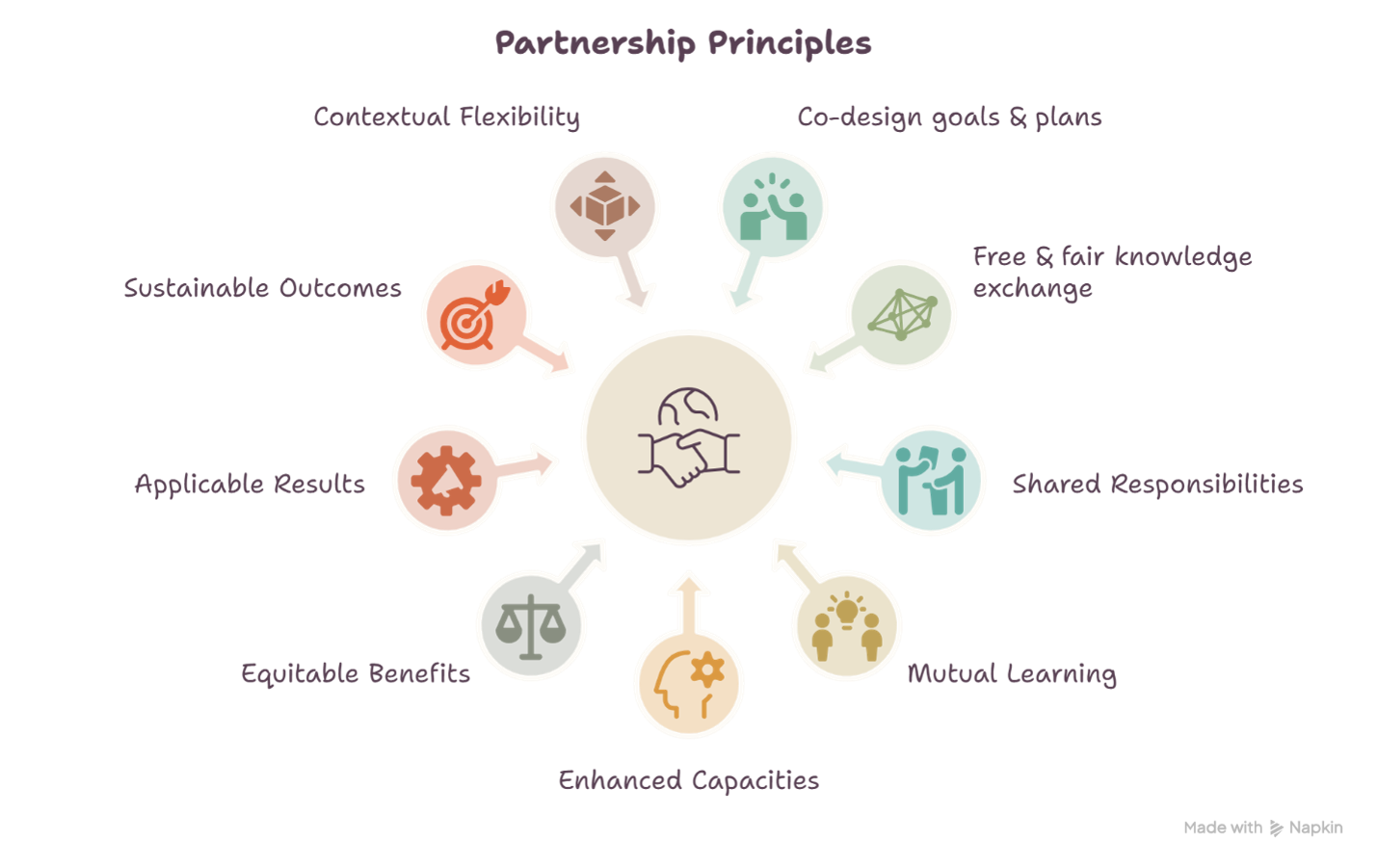
- GFAiR Partnership Principles
- Applying Partnership Principles in Projects
- Assessing Partnership Principles in Projects
- Partner-Inclusive Language
Why this matters
"There are no standards on measuring Equitable Partnerships, and a lot more work is needed. That is why GFAiR unveiled a series of guides for how to apply Equitable Partnerships in projects, as well as how to measure them at each stage of a Research for Development project."
Joanna Kane-Potaka, GFAiR Executive Secretary
A Comprehensive overview of the Equitable Partnerships
Strong research partnerships are not accidental. They are outcomes of deliberate collaboration that is fair, transparent, respectful, and mutual––values enveloped in equity. Equity is synonymous with quality in partnerships and is indispensable for impactful Research and Innovation for Development (RI4D) outcomes.
- Applying partnership principles in programmes and projects
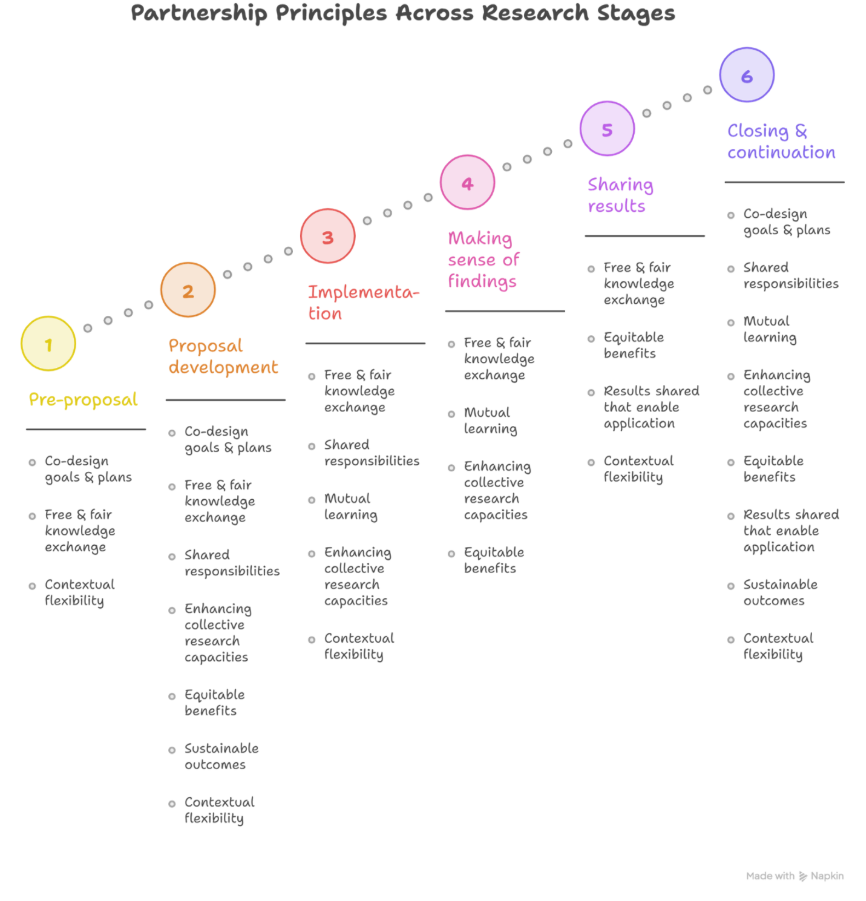
An agrifood RI4D initiative has multiple phases. The Partnership Principles can be applied in every phase by partners of a project or programme, particularly the lead or coordinating institutions, to ensure the partnership remains grounded in equity.
The Applying Partnership Principles in Projects brief seeks to guide the application across pre-proposal, proposal development, implementation, analysis, dissemination, and scaling phases of a project.
- Assessing application of Partnership Principles in projects
How do you know your research partnership is equitable?
The Partnership Assessment Tool, developed from the GFAiR Partnership Principles, helps identify and address equity gaps in partnerships.
Calling for self-evaluation at every phase of a project, the tool nudges action in a verifiable manner to close the gaps. An assessment demonstrates to relevant stakeholders that a project’s underlying partnership is equitable to all partners.
The survey-based Partnership Assessment Tool(PAT) complements the Applying Partnership Principles in Projects brief. The PAT tool can be used manually or through its digital version, with instructions provided in the introduction.
- Changing perceptions through inclusive language
The language you use when working with other partners signals how you—or your organisation—perceive the partnership. It can either reinforce hierarchy and distance, or foster inclusion, equity, and mutual respect.
Partner-inclusive language use begins with recognising common non-inclusive or exclusionary narratives that defy principles of equitable partnerships.
Co-designed with practitioners for anyone working in RI4D, the Partner-Inclusive Language brief offers alternative framing to everyday non-inclusive language use cases, grounding communication in equity.
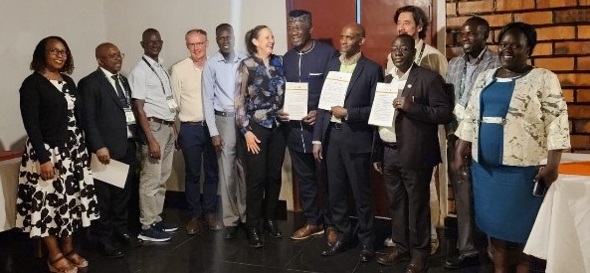
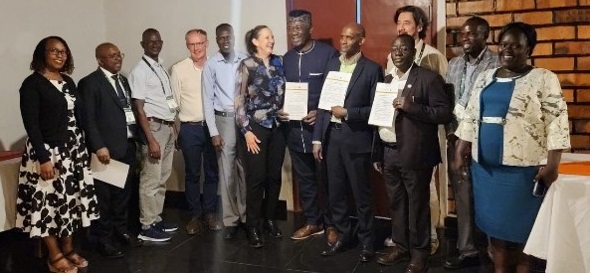
Photo caption: From left to right:
Julian Barungi (Policy Officer, The Association for Strengthening Agricultural Research in Eastern and Central Africa (ASARECA));
Dr. Majola L. Mabuza (Special Programme Coordinator, FSRP, The Centre for Coordination of Agricultural Research and Development for Southern Africa (CCARDESA))
Dr. Joshua Sikhu Okonya (Technology and Innovation Officer, The Association for Strengthening Agricultural Research in Eastern and Central Africa (ASARECA));
Francois Stepman (Advisor, The Global Forum on Agricultural Innovation and Research (GFAiR));
Moses Odeke (Technical Officer, Monitoring and Evaluation, The Association for Strengthening Agricultural Research in Eastern and Central Africa (ASARECA));
Joanna Kane-Potaka (Executive Secretary, The Global Forum on Agricultural Innovation and Research (GFAiR));
Dr. Emmanuel Njukwe (Director of Research and Innovation, West and Central African Council for Agricultural Research and Development (CORAF));
Dr. Aggrey Agumya (Executive Director, Forum for Agricultural Research in Africa (FARA))
Dr. Botir Dosov (GNC Coordinator, The Global Forum on Agricultural Innovation and Research (GFAiR));
Dr. Sylvester Dickson Baguma (Executive Director, The Association for Strengthening Agricultural Research in Eastern and Central Africa (ASARECA));
Achilley Ssebwana (Programme Officer, Information Systems, The Association for Strengthening Agricultural Research in Eastern and Central Africa (ASARECA));
Blaise Amony (Partnerships and Capacity Development, The Association for Strengthening Agricultural Research in Eastern and Central Africa (ASARECA)).