
Making Biopesticides Work: Connecting regulation, scientific evidence and sustainable pest management
8 October 2026
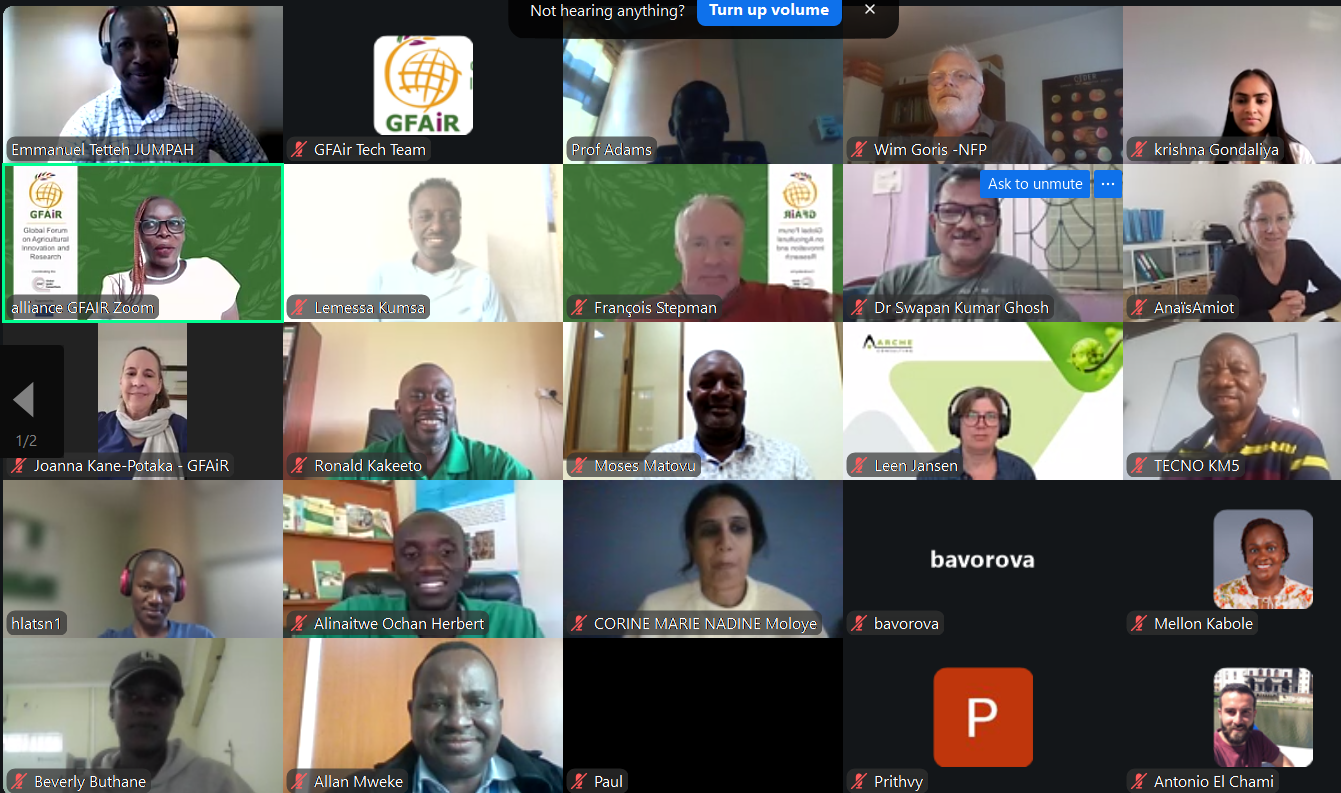
The Global Forum on Agricultural Innovation and Research (GFAiR), European Forum on Agricultural Research for Development (EFARD) and the University of Applied Sciences Weihenstephan-Triesdorf (HSWT) organised an impactful webinar titled "Making Biopesticides Work: Connecting Regulation, Scientific Evidence and Sustainable Pest Management".
This was a very timely webinar. In the wake of global challenges such as climate change, biodiversity loss and land degradation, the need for sustainable pest management alternatives is urgent — especially as agrochemicals become more expensive, more difficult to access, and increasingly harmful to the environment, health and resilience.
The webinar brought together two complementary research perspectives, examining how regulatory conditions and field-level effectiveness influence the development, commercialisation and adoption of biopesticides.
- Krishna Gondaliya (HSWT) presented “Context-dependent effectiveness of biopesticides in field crop systems and implications for sustainable pest management: a structured evidence review.” The presentation examined how biopesticide performance varies across agricultural environments and field conditions. Unlike conventional approaches that assess efficacy under standardised experimental conditions, the review emphasised the importance of understanding the contexts in which biopesticides deliver reliable results. The review provided a basis for considering how scientific evidence can inform product development, farmer recommendations and the integration of biopesticides into sustainable pest-management strategies.
- Dr Emmanuel Tetteh Jumpah (EFARD/HSWT) presented “Why Biopesticide Regulation Matters Globally,” drawing on a 2026 multi-stakeholder expert survey covering Europe, Asia, Sub-Saharan Africa, North America and the Middle East.
The survey examined the legal and regulatory frameworks governing biopesticides and identified several major challenges:
- Unpredictable approval timelines and administrative inefficiencies that delay market access.
- Regulatory requirements that may impose disproportionate burdens on lower-risk biological products.
- Limited technical and institutional capacity for evaluating and registering biopesticides.
- Barriers faced by small and medium-sized enterprises (SMEs) developing innovative biological pest-control products.
- Insufficient regulatory harmonisation and mutual recognition across countries and regions.
- Regulatory frameworks that do not always reflect local agricultural conditions and practical implementation needs.
The presentation explored the importance of proportionate, risk-based regulatory approaches that maintain safety and efficacy standards while facilitating innovation, investment and access to biological pest-management solutions.
Connecting regulation, research and agricultural practice
A moderated panel discussion and question-and-answer session brought together the two perspectives, exploring how regulatory systems, scientific evidence and local agricultural conditions interact. The central message was that biopesticides cannot be scaled successfully through technological innovation alone.
Their effective deployment requires coordinated efforts involving researchers, regulatory authorities, agricultural extension services, private-sector developers and farmers.
Reliable field evidence can strengthen regulatory decision-making, while more predictable and proportionate regulatory procedures can encourage investment and facilitate access to effective biological products.
The session was moderated by Dr Adams Abdulai, a distinguished Ghanaian economist with expertise in agricultural economics and development studies and the Master of Ceremony was Hellen Miseda, the GFAiR Communications Coordinator, a distinguished Kenyan communications professional.
The GFAiR's Collective Action on Agroecology aims to strengthen agroecological transitions through research, policy engagement and innovation partnerships, with a focus on biopesticides as a cornerstone of sustainable pest management.
Learn more: https://lnkd.in/dw6tRW4S nbsp;