
The UK Department for International Development (DFID) is launching a Challenge Fund to support the development and testing of innovative approaches and partnerships for strengthening land governance, with a specific focus on piloting approaches to responsible land-related investments. The geographic focus is on 7 countries in Africa: Ethiopia, Malawi, Mozambique, Nigeria, Tanzania, Zambia and Sierra Leone.
World Bank’s Global Program on Forced Displacement (GPFD) has issued a call for ideas to improve development response for refugees and internally displaced persons. Proposals are currently being accepted innovative and transformational ideas that can improve the development response to forced displacement.
GFAR themes 2013
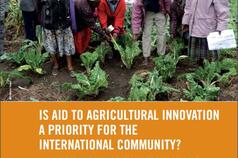
For a wide range of developing countries data concerning public and private spending on agricultural research and development is collected and assessed by the agricultural science and technology indicators (ASTI) initiative. assessment of foreign assistance to agricultural, forestry and fishing research and to agricultural extension has received less attention. The present study used OECD data to analyse the amount and variability of foreign aid directed to agricultural research and extension, as well as to forestry and fishery research, during the period of 2002 to 2012.
GFAR themes 2013
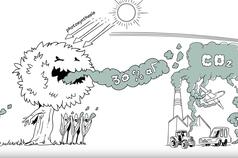
The 4 per 1000 Initiative was officially launched at the COP21 Climate Conference during the side event on Soils for Food Security and Climate Initiative on December 1st. The Initiative aims to reduce manmade CO2 emissions by boosting carbon sequestration in the soil, by means of agricultural practices. GFAR Chair, Juan Lucas Restrepo, attended the launch.
The Global Donor Platform for Rural Development is seeking a Senior Team Leader for the Platform. The tasks of the senior team leader include the management of the secretariat and the cooperation with the co-chairs and the board and non-board members.
GFAR themes 2013
Agriculture is both “villain and victim” when it comes to climate change. The sector contributes an estimated 13.5% of global greenhouse gas emissions and land use change for food production is responsible for 75% of deforestation worldwide, while also driving land degradation. But agriculture will be heavily impacted by climate change, with severe implications for livelihoods, the availability of food and economies. Multilateral climate funds have channelled $744 million to support agriculture, with an overwhelming focus on adaptation and resilience building.