This document outlines the GFAR theory of change. The outcomes GFAR hopes to achieve are: interconnected agri-food R&I systems, inclusive governance of R&I programs, empowered small-scale producers and MSMEs, mutual accountability and collective learning between stakeholders. The effect is a strengthened and transformed agri-food research and innovation, leading to enhanced capacity to deliver sustainable solutions. The impact is more inclusive, transparent, accountable, efficient, and resilient agri-food systems towards achieving sustainable development goals.
This document outlines nine selected criteria for assessing the quality of research partnerships. These criteria include: ensuring equity in cooperation and shared ownership from the beginning, transparent communication and exchange of knowledge, effective negotiation and sharing of responsibilities, promoting mutual learning, enhancing collective research capacities, sharing benefits and merits in an equitable manner, disseminating results broadly in forms that encourage and allow application, and seeking sustainability of the processes and outcomes.
The text presents engagement principles for working with GFAR. It proposes the use of the terms "members" and "partners" to define organizations within GFAR's network. The document outlines the principles of engagement, including membership and representation, funding, and benefits and commitments. It also discusses the principles and operationalization of Collective Actions, which are initiatives that involve GFAR members and partners working together towards shared goals.
The document outlines the strategic vision for GFAR, the Global Forum on Agricultural Research, which aims to contribute to the SDGs by making agrifood research and innovation systems more responsive and equitable. To achieve this, GFAR focuses on small-scale farmers, who account for 84% of all farms worldwide, by empowering them through collective actions. GFAR also aims to establish partnership principles as a global standard to ensure that agricultural research is done in partnership with the most important actors - small-scale farmers.
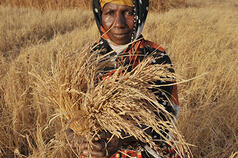
The Global Forum on Agricultural Research and Innovation (GFAR) coordinates hundreds of agencies and organisations internationally. Hildegard Lingnau, its executive secretary, told D+C/E+Z why researchers should focus more on family farms in the global south and why real innovation is about more than merely technological advancement.

GFAR is pleased to announce the appointment of our executive secretary, Dr Hildegard Lingnau, into CGIAR’s independent external high-level Advisory Panel.
The advisory panel’s mandate is to guide leadership and staff in strengthening their strategic engagement with countries and regional partners as CGIAR continues its transition to an integrated One CGIAR.