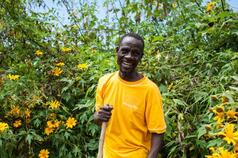
It is expected that by 2050, there will be around nine billion people living on our planet. In order to ensure that they all have enough food, it is vital that the economic development of rural areas is accomplished with good result.

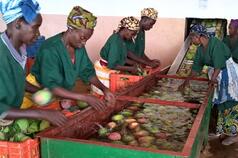
Rural areas offer a great abundance of natural resources, both for the current generation and for future ones. Furthermore, they also offer great potential for development. For example, the spread of digital technologies and regional trade, and in particular the local processing of raw materials and agricultural products, can benefit rural areas.
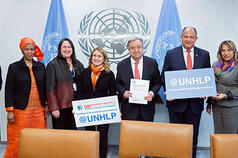
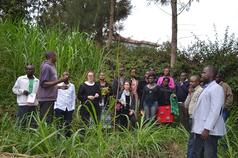
The final report to the UN Secretary-General's High-Level Panel (HLP) on Women’s Economic Empowerment has now been published, stressing that building women’s economic empowerment must be done in ways that leaves nobody behind, particularly the most marginalized women at the bottom of the pyramid. 

The report, entitled “Leave No One Behind: Taking Action for Transformational Change on Women’s Economic Empowerment”, also acknowledges that gender inequalities remain persistent across the world, but they can be overcome if barriers are removed.

GFAR themes 2013

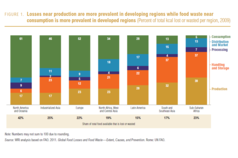
One-third of all food produced in the world is lost or wasted from farm to fork. This level of inefficiency in the food system has tremendous economic, social, and environmental consequences. In September 2015, a historic window of opportunity opened to elevate the issue of food loss and waste reduction on the global agenda. At the United Nations General Assembly, countries of the world formally adopted a set of 17 Sustainable Development Goals (SDGs) as part of the 2030 Agenda for Sustainable Development. SDG 12 seeks to “ensure sustainable consumption and production patterns.”

Regardez cette interview avec Stéphanie Barrial du Forum Rural Mondial, qui représente la société civile et les ONG au niveau global dans le Comité directeur du GFAR. Lors de la récente réunion du Comité directeur du 8 au 9 février 2017, nous avons profité de l'occasion pour poser à Stéphanie les questions suivantes:

1) Selon vous, quelles seront les clés de succès qui vous permettront de  représenter et impliquer efficacement les groupes de votre secteur et de les  amener à s'engager avec les autres groupes du GFAR pour obtenir des résultats tangibles et des changements réels?

Vea esta entrevista con Maria Rodriguez de FORAGRO, que representa a la región de América Latina y el Caribe en el Comité Directivo del GFAR. Durante la reciente reunión del Comité Directivo del 8 al 9 de febrero de 2017, aprovechamos la oportunidad para pedirle a María sus ideas para acciones que le gustaría ayudar a su electorado a realizar en los próximos años.

Subscribe to