As April draws to a close, take a few minutes and have a look at this round-up of news, events, blog posts and opportunities showing the truly diverse range of Partners in GFAR!
GFAR themes 2013
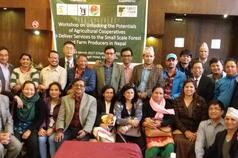
One of the five point priority agenda of the Asian Farmers Association for Sustainable Rural Development (AFA) is to build and strengthen farmers’ cooperatives and their enterprises that will give farmers a stronger involvement in value chains and increase their market power. Thus, AFA has established a Cooperative Development Program which aims to “build a strong and viable network of farmers’ cooperatives, owned and controlled by small scale family farmers, engaged in sustainable and growing business enterprises that leverage economies of scale.”

GFAR themes 2013
On April 25-26, the AYA Forum is being organised by the African Development Bank (AfDB), in collaboration with Partners in GFAR: CTA, the International Institute of Tropical Agriculture (IITA) and the African Agribusiness Incubation Network (AAIN). About 250 young agripreneurs from across Africa, as well as institutional and business partners, are expected to attend.
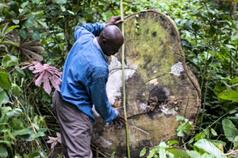
Forest degradation, deforestation and agricultural production contribute to almost a quarter of global greenhouse gas (GHG) emissions. The ways in which agricultural and forest lands are managed are critical for climate change mitigation, global food security and achieving the sustainable development goals. To reach emissions reduction targets, while avoiding negative effects on food security and other human well-being outcomes, there is an urgent need to develop effective policies and programmes in the land use and forestry sector.
GFAR themes 2013
Three recent publications examine pathways to sustainable, productive farming, including agroecology in Africa and examples from our global agricultural heritage.

On April 1st, GFAR Partner Food Tank held their Boston Summit which brought a wide range of voices together—farmers, eaters, businesses, policymakers, academics, youth, funders, media, and civil society—to have uncomfortable conversations that will help make the food system better for all.

GFAR themes 2013
The international body that oversees plant health has taken a big step forward with the adoption of a new global standard to help ensure that the international trade in plants and seeds, while very profitable, is also safer.